
Things only British people do

I say “cheers” when the postie hands me a package now. I don’t stop to think about it, which is strange because that little word took a very long time to feel natural. Meanwhile, someone can say “You all right?” and still make me panic after ten and a half years in the UK.
Living here hasn’t made every British habit make sense to me at the same speed. Some have become part of my own day, some are things I love watching other people do, and one involves a washing machine that I will complain about forever. These are my observations as a Canadian living here, rather than a claim that every British person does the same things.
Saying hello still catches me out
“You all right?” sounds like a question about my wellbeing. Coming from North America, I’m used to “Are you all right?” meaning that someone looks unwell and you’re concerned about them. Here, I hear it as a greeting from friends, strangers, the postie or the bus driver, and the usual response can be as small as “Yeah, you?”
I understand the explanation. It still doesn’t feel natural to me. Ten and a half years is apparently not enough time for my brain to stop treating it as a genuine question.
“Cheers” has gone the other way. When I moved here, I didn’t realise people used it to say thank you in all sorts of situations, rather than only when raising a drink. Now I use it without having to make a conscious decision.
Years ago, I wondered whether I should make myself use British words even when they sounded odd coming out of my mouth. I settled on speaking naturally instead of criticising every word while trying to have a conversation. Over time, plenty of those words have arrived on their own. Cheers was a recent addition.
Leaving takes a while
One of my favourite things is the knee slap followed by “Right.” It’s a cue that whatever you’re doing has come to an end and you’re about to leave. I see it in formal and informal situations, with family, friends and strangers.
The actual leaving, however, requires more work. You say how lovely it was to see everyone, suggest getting together again, ask about next week, and somehow start another conversation. Then someone remembers they’re supposed to be going, and the goodbyes begin again.
I especially love the phone version. After you’ve said it was lovely to speak and promised to ring again, there’s the final string of “bye, bye, bye, bye, bye.” It’s a whole production. Please don’t stop doing it.
I understand the kettle now
I first found the habit of putting the kettle on for almost any occasion quite cute. Good news, terrible news, a plumber coming round, a family crisis. There always seems to be a reason for tea.
Canada, in my experience, is much more of a coffee culture, with Tim Hortons and all the rest of it. Tea as a comfort wasn’t my reality in the same way. But when I was sick and miserable for about a week and a half, I sat on the couch with a cup of tea, and it did make me feel better. I get it now.
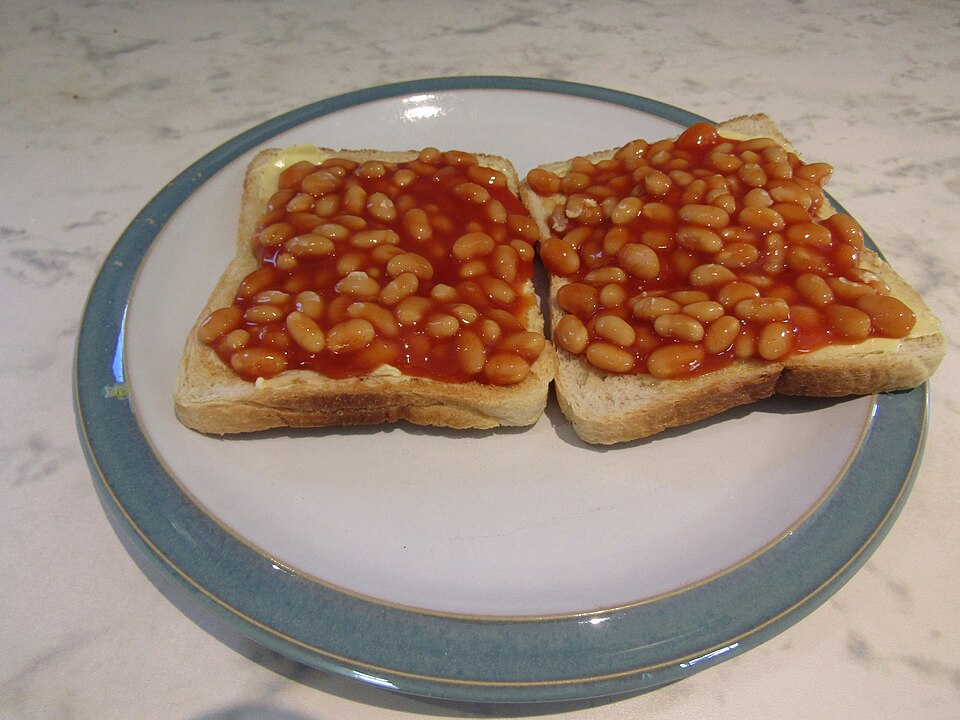
Baked beans are another thing I understand. People make fun of British meals involving beans, but I like the taste, and they’re useful. With a full English, they give me sauce without needing ketchup. Beans on toast or on a jacket potato make sense to me too.
Some habits deserve defending
I love that people make a queue even without ropes or barriers, including at a bus stop where a crowd has gathered. Waiting for people to get off before boarding belongs alongside that. The other day, people were pushing onto my train before I could get off, and I hated it.
Thanking the bus driver is another favourite. Yes, they’re doing the job they’re paid to do, but I still want people to say thank you. If the person ahead of me doesn’t, I will thank the driver extra loudly.
The washing machine is still a problem
Even my student house in Canada had a laundry room in the basement. So did the little townhouse where I lived by myself afterwards. I hadn’t given laundry rooms much thought until I moved to the UK and found washing machines in kitchens.
In our last flat, the two-in-one washer-dryer would run for hours and leave the clothes damp, so I’d hang them up anyway. I know this is something I have to get over, but I don’t have to like it. Twenty-two-year-old me didn’t expect to spend this much time thinking about laundry rooms.





No Comments