
I tried eating breakfast like a Victorian
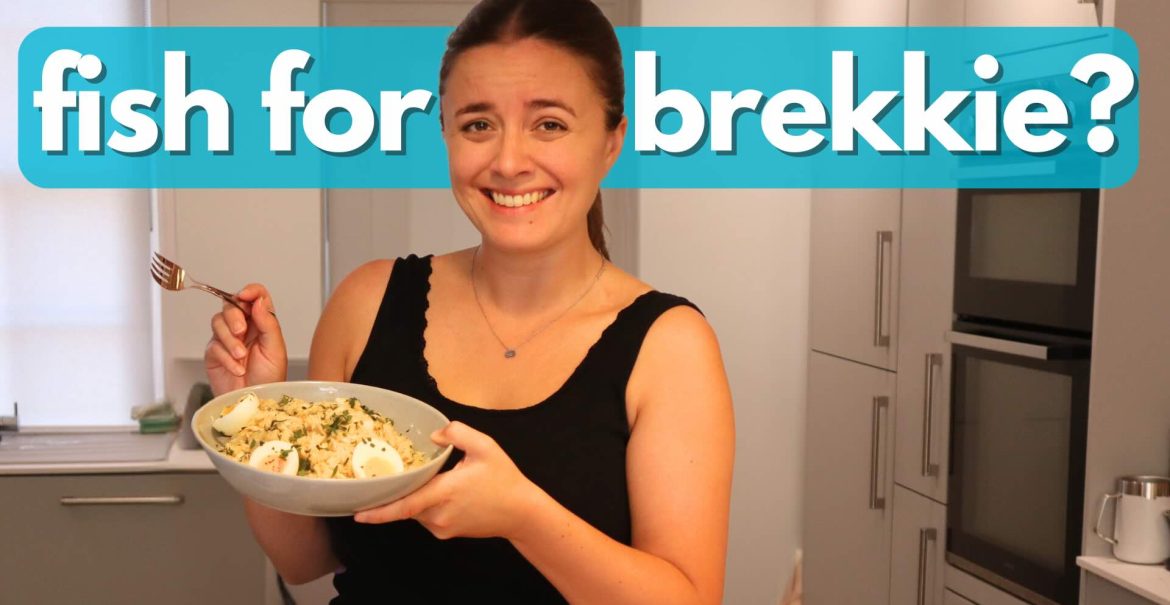
Fish, hard-boiled eggs and cream weren’t what I wanted to eat during an English heatwave. The forecast was 31 degrees, I was already sweaty, and I’d decided to make a Victorian breakfast anyway. English Heritage’s historical cooking series had introduced me to this version of kedgeree, and I wanted to see whether it would actually be good.
I’d never heard of kedgeree before moving from Canada to the UK. My partner had since made it, but his version and this one were going to be quite different. The fish and rice were familiar enough. The cream was the part I couldn’t get past.
Watch my Victorian kedgeree attempt on YouTube.
Following the recipe, sort of
The recipe came from English Heritage’s Victorian breakfast video. I watched it on the couch, thought it would be a fun thing to try, and then forgot the recipe. A promising start.
The basic job was to cook unsmoked white fish, plain rice and hard-boiled eggs separately, then bring the fish and rice together in a frying pan. That didn’t sound particularly complicated. Following the quantities was another matter, because I decided to make less and immediately got confused about cooked versus uncooked rice.
I went with 100 grams of uncooked rice and 100 grams of fish. Those were my choices for this attempt, rather than a carefully scaled version of the original. I wanted runny eggs, but hard-boiled eggs were part of the breakfast I was trying, so I made two of those as well.
The rice and eggs went on the stove, and I cooked the fish in the air fryer. I used our two separate hobs because the main hob is painfully slow. Even using only two at a time is faster for us than cooking on the main one.
There were more departures from the original before anything reached the frying pan. I had salted butter rather than unsalted, so I skipped the extra salt. English Heritage’s version included brown shrimp, which I left out because I’m allergic. I did have parsley, though, and decided to use it.
The cream was the sticking point
The cooked fish needed flaking, and I didn’t want to break it into tiny pieces before mixing it with the rice. As for the boiled eggs, I was relieved that the yolks weren’t completely opaque. They still weren’t the gooey eggs I’d choose, but I was willing to try them.
Then came the butter, cayenne, beaten egg and cream. I hadn’t properly halved everything, so there was another round of remembering which amounts I’d changed. I used half the beaten egg mixture and eyeballed the cream rather than putting in the full amount shown in the English Heritage video.
I browned the butter, coated the rice in it and added the fish with some cayenne. The rice had already solidified because I’d forgotten about it. Once the egg and cream went in, the whole thing became much softer and creamier than I’d expected a fish-and-rice dish to be.
I topped the pale mixture with pieces of hard-boiled egg and parsley. It looked quite close to the version I was following, although mine had no shrimp and I hadn’t piled the rice neatly in the middle. By then it was lunchtime. My Victorian breakfast had become brunch.

What I’d change next time
The creaminess threw me when I tasted it, but the cayenne came through too, and I kept eating. I liked the fish, rice and eggs. This was a surprising success.
My partner’s kedgeree, as I remembered it, used smoked fish, turmeric and parsley, with definitely no cream. I wasn’t sure about every other ingredient. The Victorian version was different, particularly with cream and beaten egg mixed through, but I could still recognise the same sort of dish.
Would I make kedgeree again? Honestly, yes. I’d want softer eggs and more seasoning than the little bit of cayenne I used, and I’d probably leave the cream out. I didn’t need it to be quite that creamy.
Would I want it for breakfast? Absolutely not. I was happy enough to keep eating it for lunch.




No Comments