
Speechless at London’s RAF museum (first time visit!)

By the end of my first visit to London’s RAF Museum, I was walking past aircraft because I couldn’t read another plaque. I’d spent over two hours there and still hadn’t seen everything. The last hangar was so big that I wished I’d saved more of my attention for it.
Getting to the museum had taken more than two hours too, followed by rain on the walk from the Tube. I’d forgotten both an umbrella and my hat. Cold and soggy, I went inside hoping the journey would be worth it.
Watch my RAF Museum visit on YouTube.
Plenty to see before I knew the half of it
I’d booked a free ticket and skipped the paid extras offered during booking. I hadn’t researched the collection, so I started in Hangar 1 without much idea of what was ahead.
A bright yellow Sea King caught my attention. I’d never seen anything like it in person, and the length of the rotors was astonishing. The information panels gave me details about the aircraft, which helped when I had no idea what I was looking at.
The engines were another surprise. I don’t spend much time thinking about engines, but faced with their size and all those parts, I couldn’t help wondering how anyone designed them. Seeing Frank Whittle mentioned connected the museum with things I’d studied for my British history and culture exam. It was cool when the studying and the museum visits overlapped.
I also liked the personal stories on the plaques. Those names gave me people to read about alongside the machinery. There was already so much in that first building that I thought it might contain most of the visit. It didn’t.
Alone inside the Sunderland
I saw stairs leading into an aircraft and wanted to go inside. It was a Sunderland, and walking through it on my own was both special and a little spooky.
The interior had tight spaces, and speakers played rumbling sound effects. I felt uneasy, partly because I was there alone. I’d never been inside anything quite like it. I imagined it would feel very different with lots of people and children around, but that wasn’t my visit.
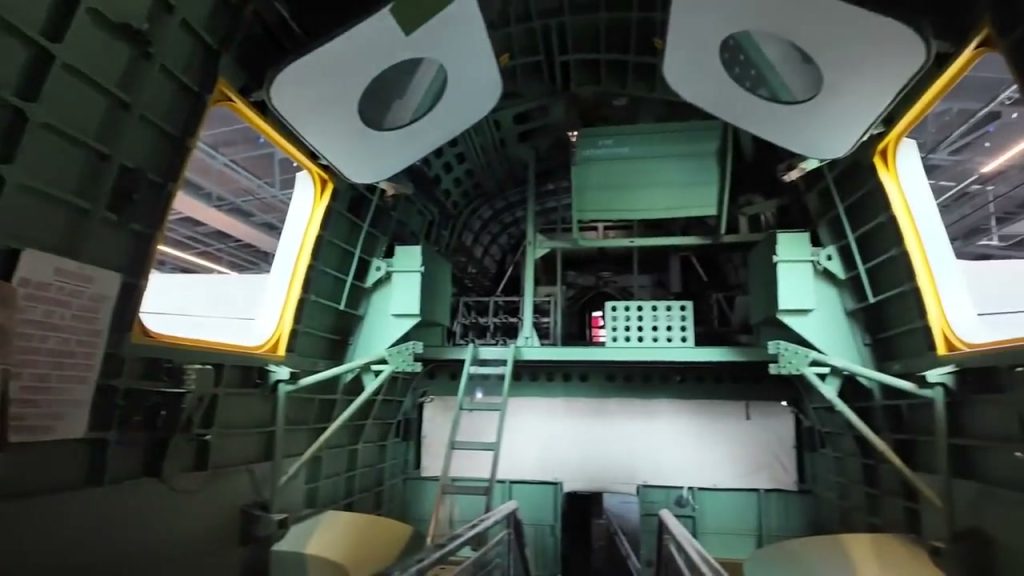
I was pleased to have been able to walk through it, even if I also wanted to get back outside. The chance to go inside made the size of the collection more surprising. This was part of my free visit, and I couldn’t believe how much was included.
Afterwards I stopped for the Spitfire chicken burger, chips, a side salad and a Coke Zero. The meal was about £16 that day, expensive but comparable with other London attraction lunches I’d had. The burger and chips were great; the undressed salad wasn’t my favourite. I left full and a bit lethargic.
The aircraft kept coming
The modern-era hangar had yet more huge engines and aircraft, including a Tornado I could go up to look at. All those cockpit buttons made me think about the training and knowledge a pilot would need. I wondered how different one aircraft would be from another if you had to switch between them.
Then I reached the buildings marked Hangars 3, 4 and 5. I’d followed the walking order rather than a chronological route, and I immediately wished I’d come to this part earlier. There were aircraft in so many shapes and sizes, packed together, and I couldn’t even see the end of the hangar.
A damaged Halifax stood out because most of the aircraft I’d seen looked pristine. Seeing it alongside those restored-looking machines reminded me that these were real aircraft with histories of use. It was a useful contrast to all the shiny surfaces.
I also walked underneath a Vulcan and looked up into its bomb bay. Being able to get that view was cool, but standing beneath something so big made me imagine it falling. I didn’t stay there long.
The last aircraft I stopped at was a Southampton flying boat fuselage. I could get close to its steering wheel, which looked like one from a car, and found myself admiring the wood. Apparently I’ve reached the age where nice wood deserves a comment.
Worth the journey, with more left unseen
I hadn’t visited the art gallery upstairs, properly explored another building I’d passed near lunch, or read about every plane. By then I was overwhelmed. I would have preferred to move through the first hangar more quickly and spend more of my time in the huge final section.
As I stood outside before the journey home, I absolutely thought the visit had been worth it. I was shocked by the amount I’d seen for free, and by how much remained. The museum had outlasted my ability to absorb another plaque.




No Comments