
British construction just makes SENSE!

I love where I live, but I’m desperate for a back garden. While looking at properties and thinking about a move, I’ve heard plenty of complaints about new builds in England. Then a roofing video appeared on YouTube, and I realised how little I knew about the houses I was comparing.
I’m Canadian and live in the UK, so I’ve already had to get used to a different sort of home. Construction itself hadn’t been something I’d thought about. I knew the difference between having a basement and not having one. I knew much less about what was inside the walls.
Watch my construction reactions on YouTube.
The space you grow up with
Home size has been one of the harder adjustments for me. The Canadian homes I’m used to are much bigger, and moving into somewhere smaller, more cramped and often damper has been surprising. When you’ve grown up with a particular kind of house, it’s easy to take that space for granted.
I’ve known other people who moved to the UK and struggled with the same thing. They miss basements and built-in wardrobes, and the backyards seem tiny compared with what they’re used to. There are things to like about both places, but that doesn’t make the loss of space disappear.
One of the videos I watched compared American home sizes with an average for the rest of the world. I didn’t think putting the whole world into one comparison was ideal, although it raised a point I recognised. A smaller home isn’t an abstract number when you’re the person trying to get used to living in it.
That was also why the complaints about new builds interested me. I was already hearing that people didn’t like their quality. I wanted to understand what they meant, rather than assuming a brick-looking house answered the question.
Timber, brick and the system behind them
The first longer explanation contrasted American wood framing with European brick and masonry. I already associated British homes with brick, but didn’t know much about newer houses or the methods behind their exteriors.
The explanation that stuck with me was about a building industry learning to work with one material. U.S. Observer described workers, procedures, regulations and supply chains developing around a particular way of building, then continuing with it. That made sense to me. I’d thought about Canada having lots of timber, but hadn’t considered how training people to build a house a certain way could help keep that system going.
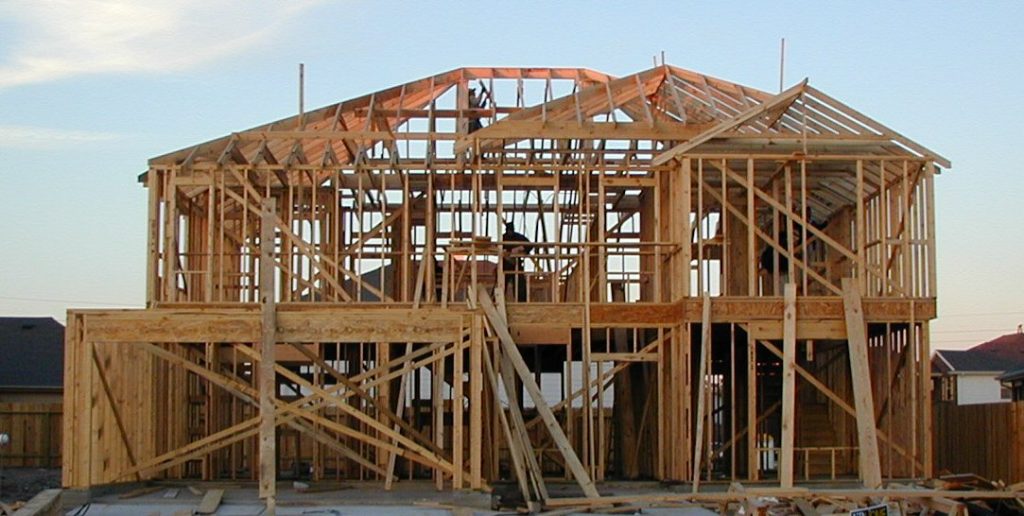
Another video, from Learn to DIY, discussed affordability and the speed of timber construction. He described a house he’d had built and the choices he’d been able to make about its layout and finishes. It was his example, rather than a house I’d seen or lived in, but I found the explanation fascinating.
Speed and quality were both part of his account. Meanwhile, people I knew were complaining about newer British homes. I still had questions about how those houses were built, and whether the brick-versus-timber comparison told me enough.
What people notice inside a new build
Ben the Builder’s explanation addressed the complaints more directly. He talked about lightweight steel frames and contrasted internal finishes in newer and older homes. I hadn’t realised steel framing was part of the discussion, and I wasn’t sure whether he meant all new builds or certain kinds.
His examples included lighter, hollow doors and plasterboard walls, compared with heavier doors and solid walls in older houses. The idea that people notice the finishes inside a house made sense to me. Those are the things you live with, even if you know nothing about its frame.
I also wanted more character than the new-build example he showed. That was my reaction to that example, and I still wasn’t in a position to judge construction as a whole.
I’d started with a roofing clip and ended up with questions about timber framing, steel framing and the houses I was considering. I found the explanations interesting, but I still knew very little about building a home. The wish for a back garden was much easier to understand.





Francisco
There is no contradiction between the statement that the *materials* that are used here are designed to last centuries and new builds may not. If a house falls down but the bricks are still useable then the bricks are lasting their design life..
<< someone who could keep up with Sir Humphrey Appleby* almost all of the time even when a teenager
*See Yes, Minister and Yes, Prime Minister