
1970s British adverts were WILD
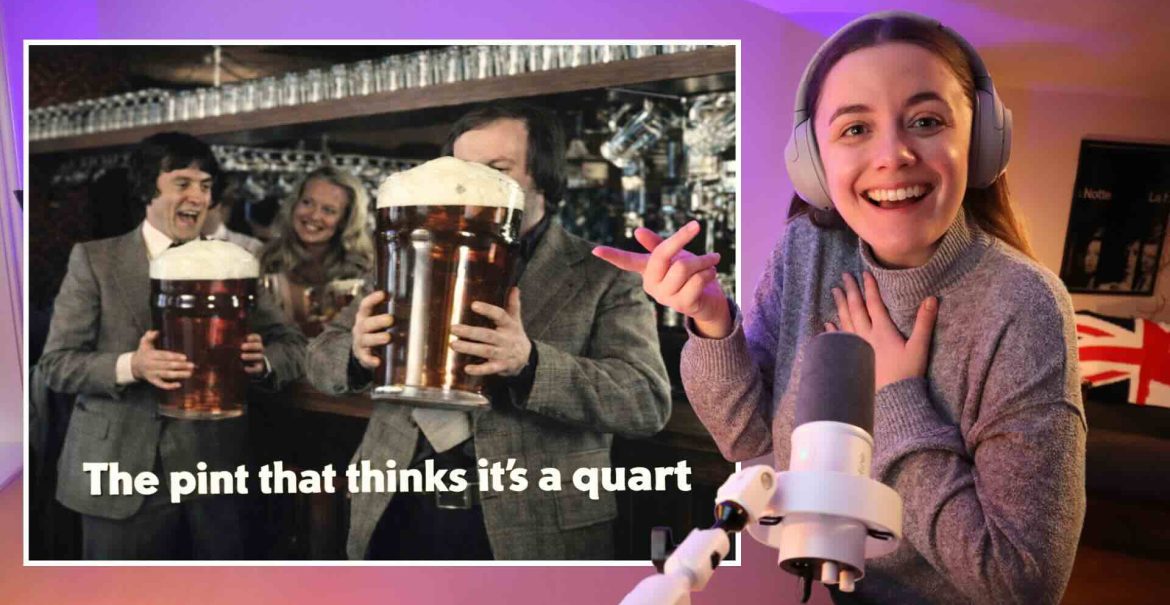
I expected a compilation of 1970s British adverts to teach me something about British culture. I didn’t expect to recognise so many of the brands, or to become quite so interested in the prices. Twix, Black & Decker and Birds Eye were all there, advertising products long before I’d ever encountered them.
As a Canadian living in England, I like learning about the country through its adverts. Martin Potter had collected two hours of these older ones, and I watched a selection. Choosing to watch adverts turned out to be much more enjoyable than having them interrupt whatever I actually wanted to watch. It felt like a British time capsule.
Watch my 1970s British adverts reaction on YouTube.
Technology I hadn’t considered
The Dixons sale advert offered cameras, radio recorders, televisions and calculators. Hearing a portable television advertised for under £65 caught my attention. I’d been thinking about the cultural side of watching old commercials, but suddenly I was fascinated by what everything cost too. Those are the prices the advert gave, rather than a comparison of what people could afford then and now.
A Black & Decker electric saw was another surprise. I wasn’t expecting to see that name in the 1970s, although the bell-bottoms were less surprising. The advert explained what the saw could cut, while I was still getting over the familiar brand appearing in an unfamiliar decade.
The Kodak advert showed a small camera with a steadying handle, intended to help people hold it and take sharper pictures. I’d never seen that before, and I loved the simple idea. The camera’s size caught my attention as well. Even an advert that wasn’t especially bizarre could show me something interesting.

Please let women eat lunch
Birds Eye managed to be familiar and strange at the same time. A man presented cod in parsley sauce as a proper lunch, explaining that women sometimes didn’t bother eating lunch because they didn’t have time or didn’t think it was worth making something just for themselves.
Then came the instruction to be a good girl and have a proper lunch. A man telling women to eat lunch was quite a lot to unpack. For the record, I’ve never missed lunch, and I don’t intend to start.
Seeing Birds Eye in this collection also reminded me how many old brands I already knew without thinking about their age. I’d previously looked through my kitchen for older brands, but I still hadn’t expected so many recognisable names to turn up here.
The adverts I could understand immediately
The AA advert explained its roadside help and relay service, then used the idea that it was good to feel you belonged. I thought that was a great slogan. The advert was simple, made sense and had something potentially memorable. I hadn’t planned to critique all the adverts, but apparently I was doing it anyway.
The exterior-paint advert was even more abrupt. It said a lighthouse had been painted with Sandtex to protect it against the weather, then offered that as the reason to use it on your home. Lighthouse painted, point made, job done. Incredible.
The Barclays advert played with the British queue stereotype. It listed the bills people queued to pay and presented a bank account as a way to avoid those bill-paying queues. I loved finding that joke already there in an older advert, with the queue treated as something the audience would recognise.
Some things still worked on me
A Cadbury Dairy Milk advert brought out my own chocolate preference. If the choice is Galaxy or Cadbury, my answer is Cadbury. People often tell me the recipe has changed, but I still think the chocolate is good, and Dairy Milk is my favourite.
L’Oreal’s “because you’re worth it” was another familiar moment. I was surprised to hear that slogan in the collection. Other beauty adverts were less appealing, particularly the ones with a man whispering seductively. I don’t like that delivery.
The Green’s cheesecake advert promised a cheesecake in ten minutes with no baking. I’d recently made a chocolate cheesecake, and mine hadn’t gone especially well. It certainly hadn’t taken ten minutes. An old advert can still make a very direct comparison with the chaos in my own kitchen.





Francisco
Barclay’s is probably over 100 years old. I remember that, when I was a student, fellow students were boycotting Barclay’s because they may have had ties to the Nazis in the 30s.
Francisco
Just.checked:, and it’s over 300 years old:
https://en.wikipedia.org/wiki/Barclays
The bit which made people mad was what happened in this Pais office during the War:
From the history section:
“In 1941, during the German occupation of France, a branch of Barclays in Paris, headed by Marcel Cheradame, worked directly with the invading force.[26] Senior officials at the bank volunteered the names of Jewish employees, as well as ceding an estimated one hundred Jewish bank accounts to the German occupiers.[27] The Paris branch used its funds to increase the operational power of a large quarry that helped produce steel for the Germans. There was no evidence of contact between the head office in London and the branch in Paris during the occupation. Marcel Cheradame was kept as the branch manager until he retired in the sixties.[26]”