
The British words that became part of my everyday vocabulary
When I moved to the UK as an adult, I didn’t expect my words to change very much. I could imagine it happening to a child who grew up somewhere new, but I assumed the language I’d used for more than twenty years would stay put. After eight years here, that assumption looked pretty silly.
British words had become natural without me noticing. I wasn’t stopping halfway through a sentence to choose the local version. I was asking for a carrier bag, talking about bin day and telling my partner to stop faffing around. These were ordinary things I said while getting on with my day.
The postie brings the post
Back home, I’d called it mail and the person delivering it the mailman. By then, I called it the post, delivered by the postie. Postman was fine too, but I loved postie. I didn’t have a complicated reason for liking it. It was just a good word.
Rubbish had settled in just as comfortably. It replaced garbage when I was talking about things to throw away, but I also liked using it to describe something bad. Pizza could be rubbish. That made it satisfyingly versatile, and I asked my partner whether things were rubbish whenever I wanted to throw them out.
The word still made me think of Ron Weasley. I’d grown up loving Harry Potter, read the books, watched the films and even dressed as Hermione for an opening night. Those films had been an early introduction to British things for me. It was funny that a word with that childhood association now came out of my mouth without any thought.
Garbage no longer goes in the garbage
The container had changed names too. I’d spent more than twenty years calling both the stuff I was throwing away and the thing it went into garbage. That gave me sentences about putting the garbage in the garbage, or the garbage men collecting the garbage from the garbage.
Now the rubbish went in the bin. I asked where the bin was, talked about taking the bins out and remembered bin day. I found the old repetition ridiculous when I said it aloud, even though it had felt perfectly normal for most of my life.
Tat was another favourite. To me, it meant something with little or no value, the sort of thing you might look at at a boot fair and quietly call a load of old tat. Quietly mattered: I wouldn’t want to say that to the seller’s face. I wasn’t certain of an exact North American equivalent, although crap was the closest word that came to mind.
I put the washing on
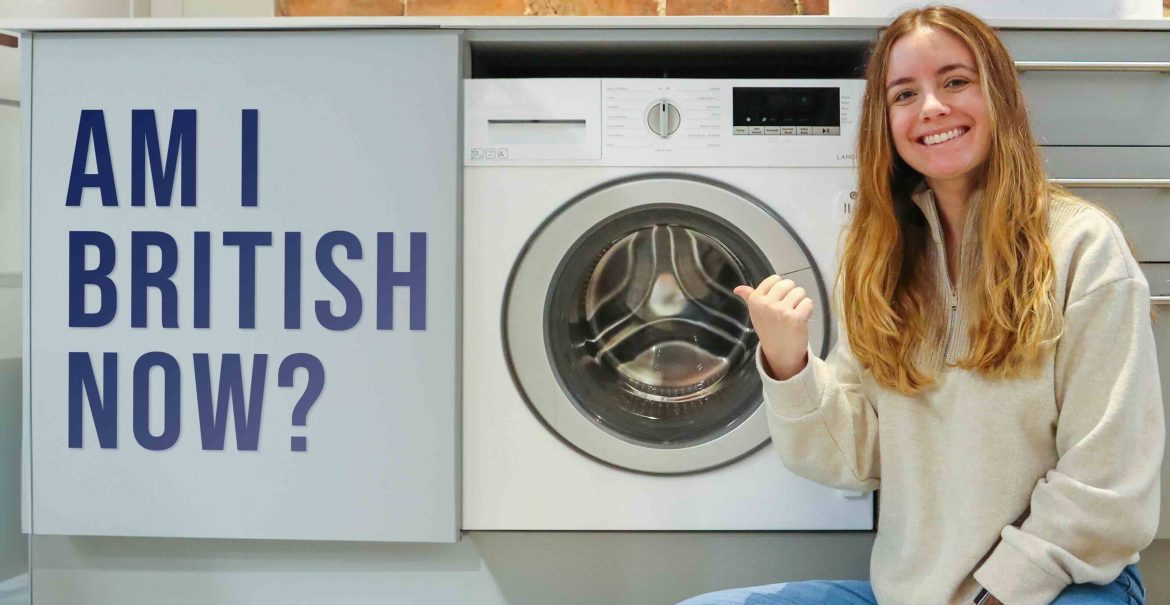
I still called the appliance a washing machine. What changed was how I described the chore. Instead of doing the laundry, I found myself saying I was putting the washing on, or asking whether my partner had anything for the washing. We’d divided the chores, and that was one I didn’t mind doing.

Washing up meant the dishes, which gave me another pair of expressions to compare. My machine lived in the kitchen, and I missed having a separate laundry room. I didn’t have a dryer either, just a heated clothes rack. The words had become familiar even while some of the household arrangements still reminded me of what was different.
Carrier bag was another phrase I used automatically, despite finding it a funny name. Weren’t bags already designed to carry things? In Canada I’d have said bag or plastic bag. Here, when I was leaving for Sainsbury’s, I’d ask my partner to throw me down a carrier bag because I didn’t want to pay for one.
Faff started as a joke
I understood faffing around as taking a long time or doing unnecessary things when something could be straightforward. At first I used it to be silly because it sounded so British to me. Eventually the joke stopped needing an audience. If my partner was running around doing things while we were trying to leave, I’d tell him to stop faffing about so we could go.
That reminded me of an early video where I’d wondered whether it was appropriate to use British words when they didn’t come naturally. I wanted to fit in and be respectful, but lift instead of elevator sounded strange with my accent. In the end, I’d decided to say whichever word came naturally and see whether that changed with time. Now I was saying faff because it came naturally and I loved it.
Some words changed, and some didn’t
Pissed was a word I already knew, but its meaning in my own speech had shifted. I’d originally used it for somebody being angry. Here, I used it for somebody being very drunk, such as a person staggering out of a pub. The same word could send me in a different direction depending on the context.
I’d also started calling adhesive bandages plasters after calling them Band-Aids for years. Other habits hadn’t moved as far. I still said bathroom rather than toilet, and still asked my partner for an Advil even though we didn’t have that brand in the house. Eight years had changed plenty of my words. It hadn’t replaced all of them.




No Comments