
9 Unexpected ways I’ve become British (after 9 years living in the UK)

I used to worry about whether to say ‘elevator’ or ‘lift’. I was the only Canadian in my little office at a college, and giving a student directions could turn into a debate in my own head. Should I use the word that came naturally to me, or the British one that still felt strange? It was exhausting to overthink something so ordinary.
By the time I looked back on nine years in England in December 2024, a lot of British words had become my default. I hadn’t forced that change. I’d eventually decided to just talk and let things happen, and now I was saying ‘cheers’, ‘knackered’ and ‘rubbish’ without thinking. That was weird enough to give me a small identity crisis.
The words arrived before I noticed
‘Cheers’ had replaced ‘thank you’, ‘knackered’ had replaced ‘exhausted’, and I was using ‘rubbish’ where I’d once said ‘garbage’. I also said ‘fussy’ and ‘cheeky’, although I wasn’t sure what the closest North American equivalent would be. A ‘cheeky pint’ had become a perfectly normal thing to say without me being able to neatly translate it back.
Whole phrases had crept in as well. If my partner suggested a Chinese takeaway, I might say ‘oh, go on then’. An ale I didn’t fancy was ‘not my cup of tea’, and I was ‘popping out to the shops’. None of that felt like putting on a performance any more. It was just how I spoke.
Early on, using my familiar North American word could feel rude to me, as though I was refusing to say the local version. Using ‘lift’ felt unnatural, though, so either choice made me think too hard. In the end I stopped trying to decide every word before I said it. Nine years later, the local words had largely become natural anyway.
I joined the tutting
I love the way people here form a queue even when nobody has marked out a place for one. You can be waiting for a bus, at a ticket office or buying a sausage roll from a food truck, and an orderly queue somehow happens without an announcement. It’s one of the stereotypes that matches what I’ve seen.
Then there’s the reaction when someone jumps it. At a museum on one of my solo outings, people cut into the lunch queue and were served straight away. Everybody around me tutted and exchanged those silent, disgusted looks. I was doing it too.
In Kent, at least in my experience, people often don’t want to confront someone directly. They will tut at the back of your head instead, which I think might be worse. I had absorbed that reaction without setting out to, and the museum queue made it very obvious.
The weather is now my default
I don’t particularly enjoy small talk, but if a situation calls for it, I now start with the weather. ‘Bit chilly out’ or a comment about the clouds comes very easily. Even passing reception at the gym, I’ll say it looks like rain and get a reply about not trusting those clouds.
When I go back to Canada, I’m sometimes surprised by how outgoing people are. In my experience, you can find yourself in a full conversation with a stranger in a queue. Around me in Kent, people tend to be more reserved. I don’t think that means they’re being mean; I think they’re conscious of not annoying somebody who might not want a conversation.
Yes, I did want the biscuit
Another habit I picked up in my first office job was the little dance around accepting something. Someone offers a biscuit, you say no, they ask whether you’re sure, then you say ‘oh, go on then’. It felt as though people brought biscuits in every day, so I learned that one fast.
Some people repeat the refusal more than once, depending on the situation. I only do it once, because I want the biscuit and I don’t want the person walking away thinking I don’t. Offer again and yes, I’d like one. By this point that first refusal was part of my own routine.
The kiss at the end of a text
An ‘x’ at the end of a message felt very strange for years. In my North American frame of reference, that would read as flirty, so getting texts from colleagues and my boss with a kiss on the end was confusing. Here, I found it could simply be a friendly thing, depending on the person and the relationship.
I use them now, although I’m still not always sure when more than one is appropriate. Looking back, I wonder whether replying without an ‘x’ early on made me seem standoffish. I hadn’t understood it, so I left it off. Plenty of people don’t use them, but among the people I message, especially women, it’s become a habit I like.
When I made this reflection, I’d spent more of my adult life in England than Canada. I didn’t consider myself British, but I could see how many British habits I’d absorbed. I’d moved at twenty-two without a grand plan, and nine years later even the ordinary words in my mouth had changed.
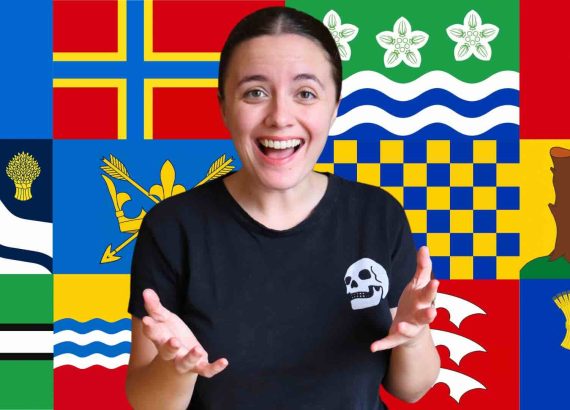
Watch my video, 9 Unexpected ways I’ve become British (after 9 years living in the UK).


No Comments