
Exploring the London Transport Museum (for the first time)

I hadn’t known the London Transport Museum existed until shortly before this solo trip. I booked it without looking at pictures or videos, caught public transport into London and discovered it was right in Covent Garden. I’d walked past before without noticing.
I’d imagined something more like an engineering museum, but once inside I thought of it largely as a history museum. It was about how London became the city I knew, with horse-drawn vehicles, old train carriages and a whole section of art that I hadn’t expected to enjoy so much.
Old transport looked nicer than it sounded
The museum started with a time-travel lift taking me back to the 1800s. There were horse buses and horse trams, which I hadn’t really thought about before. I learned that running a vehicle on rails made it easier for the horses to pull a heavier load than on an uneven road, allowing the trams to carry more people.
The displays also kept reminding me that working on these vehicles could be horrible. Operators stood for long hours in the weather, and later sections about trains and the Underground returned to difficult working conditions. I found myself appreciating today’s buses and trains a little more.
A wooden passenger carriage looked lovely, and being able to go inside made it especially interesting. Then I read about the smoke in the old Underground tunnels and stations. The attractive woodwork didn’t mean the journey itself had been pleasant. I liked looking at the carriage; I didn’t particularly want the historical travelling experience.
I could board several other carriages too, eventually seeing seats, maps and advertisements that looked much closer to the Tube I recognised. The changes were interesting, but so were the bits that hadn’t changed all that much. I wasn’t especially into trains or engineering, yet the history kept me interested.
A quiet gallery was my favourite surprise
Away from the main hall, I found the section about art on the Underground. Posters came from different eras and did different jobs. Some were artistic, some political and some explained what passengers should do, but each had its own style.
I’d never really considered Underground art as art before. It was just something there while I used the transport. Seeing these posters together made me stop and look at the imagery. I particularly liked a 1934 piece by Sybil Andrews and a space-themed design from 1938.
The gallery extended over a couple of floors and was almost empty while I was there. There were lots of interactive things for children elsewhere in the museum, but hardly anyone in this section. No screaming, almost just me. I really enjoyed it and thought it was a section worth finding rather than walking straight past.
Beautiful buses, awkward stairs
Back in the main hall, the vehicles became more recognisable, especially the red double-deckers. Before those, I stopped at a B-type bus and a West Ham double-decker tram. The tram’s colours and crest caught my attention, along with little details I didn’t associate with the buses I used now.
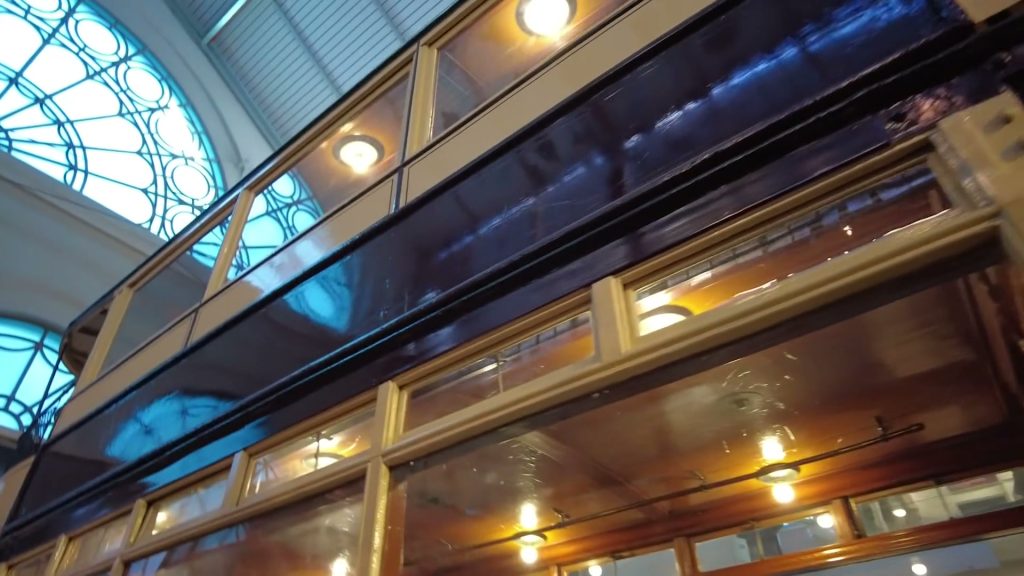
The exposed stairs looked less appealing. They were so narrow, and I kept imagining climbing them in the rain. Another old motor bus had the same problem. Lovely paintwork, but carrying shopping up those outside steps was not an experience I needed.
There were mannequins in the vehicles too, and I got rather fixated on how frightening some of them were. Going into a small carriage by myself with those faces around me didn’t help. Useful for showing the seats occupied, yes. Being there at night during a power cut? Absolutely not.
A mixed finish
Eventually I reached my limit for reading plaques. I skimmed the section about the Underground during the war even though it sounded interesting, because I just couldn’t take in much more. My ticket was an annual pass, about £25 when I visited, so I thought I might come back for the bits I’d missed.
The gift shop had seat-fabric cushions I considered buying, until I saw the price. I thought the little cushion was about £35 at the time. Then a tote bag I liked was £95, which was quite enough to make me stop touching things. I went to the cafe instead.
Lunch was a sandwich and chai latte for just under £12, as I remembered it. The sandwich was basically bread and really disappointing. The chai was great. At least eating by myself had become less embarrassing since I started these solo trips. By then I could sit down and get on with it.
Would I recommend the museum? If you like history, engineering or trains, I thought there was something to enjoy. I did, particularly the art section, but it wasn’t cheap. If none of those subjects appeals, I’d choose another London museum. My visit took about an hour with some sections skimmed, then ended with a sad sandwich and a very nice chai.
Watch london Transport Museum surprised me with history and art in the original video.



No Comments