
1 HOUR CHALLENGE at the British Museum: I can’t believe what I saw!

I love museums, but the British Museum overwhelms me more than anywhere else in London. I normally turn up without a plan, start reading everything and eventually reach the point where nothing else is going in. Then I’m still walking, but I’m barely taking in what I see.
For this solo visit, I tried the museum’s own one-hour guide. There were twelve stops on the list, which gave me permission to bypass whole rooms instead of trying to inspect every object. That felt strange at first. It also turned out to be much more enjoyable than my usual approach.
A list made it a treasure hunt
I went on a sunny, freezing winter’s day, with blue sky and no rain. I like choosing a random weekday afternoon for my solo outings, and the museum wasn’t too busy on this visit. Once inside, I got a map and headed for the first stop, through a room I didn’t think I’d ever visited before.
The guide didn’t put every object directly under my nose. It sent me to a room, then I had to scout around for what I wanted, which made the whole thing feel like a treasure hunt. First was the Holy Thorn Reliquary, an elaborate gold object with jewels, made to hold what was believed to be a thorn from Christ’s crown of thorns.
It was in a corner where people were walking past, and I was floored. That became a recurring thought on this route. How many times had I already walked past these things? Apart from one or two major objects, almost everything on the list felt new to me.
Small objects deserved a proper look
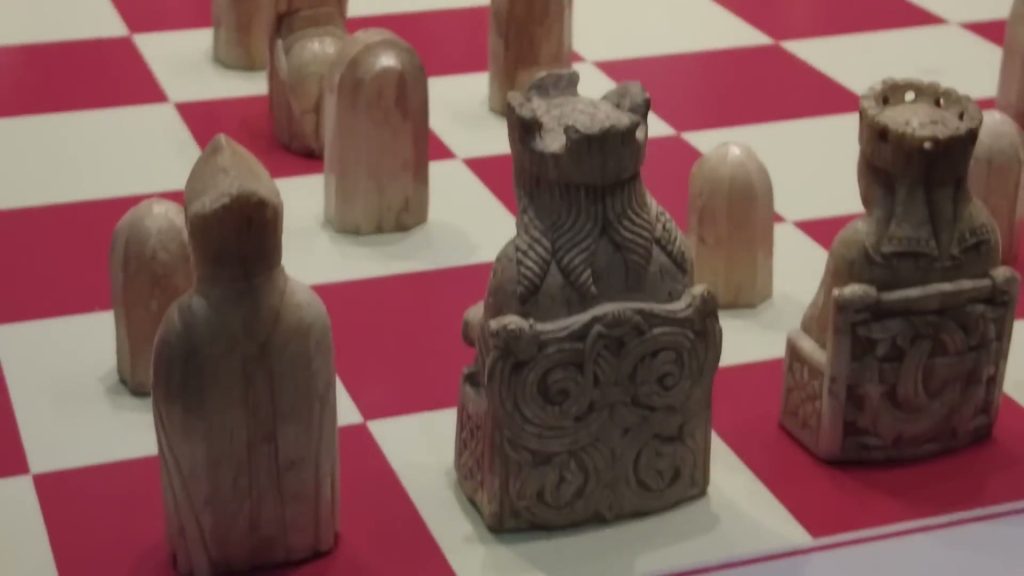
The Lewis Chessmen were a good example. These carved ivory chess pieces had grooves and details I wanted the camera to catch, and I loved looking at the carvings and shapes. I was fairly sure I’d passed them on previous visits without giving them a proper look. This time the route made me stop.
The astrolabe was another surprise. I learned about a device with interchangeable plates that could provide information about the sky depending on where someone was in the world. There were layers and tiny engravings, and I worried the camera wouldn’t show how fine the work was. Looking at something so old with that much detail was extraordinary.
Then the Oxus treasure drew me in with small gold and silver pieces. Among the animals were familiar ones and imagined creatures, including winged goats and lion griffins. I kept being surprised by the amount of detail in things that were so tiny.
These stops weren’t all beside each other, so I travelled around the building and made a few wrong turns, including a wrong staircase on the way to the Roman objects. It was tempting to stop at everything I passed. I had to keep reminding myself that I was there for particular things.
Familiar objects still had something to offer
I did recognise the large moai from Easter Island. It’s hard to overlook something that big. The Rosetta Stone was another familiar stop, and although the museum itself wasn’t particularly busy, I still had to wait in line to get close to its glass case.
Looking closely at the Rosetta Stone meant noticing how the inscriptions changed from one script to another. The preserved markings interested me, and I wished the camera could show them properly in the darker display. I also wanted to linger in the Egyptian section, but that wasn’t the whole purpose of this visit. I kept moving.
I didn’t want to ignore how some objects had arrived in Britain, either. At the Benin bronzes, I talked about objects taken as spoils of war during Britain’s 1897 invasion. I wasn’t attempting a complete history of colonialism in a short visit, but pretending that history wasn’t part of what I was looking at would have been disingenuous.
A route I would try again
The final room was the Parthenon gallery, with sculptures that had once decorated the temple. There was so much to take in, and it was here that I found myself thinking about how lucky I was to visit on a Thursday afternoon. Living abroad has some terrible parts, which I try to be honest about. That particular moment felt special.
By the end, I was getting tired and peckish, but I’d had a much better visit than when I wandered until everything blurred together. I saw another guide for two to three hours and thought I might try that next time. For this trip, the shorter list had done exactly what I needed. It made me stop and look.
Watch one hour at the British Museum helped me stop missing the details in the original video.




No Comments