
Taste testing Britain’s deadliest beers (call 999)

I went to my local Tesco and picked out five of the strongest British beers I could find in its alcohol aisle. I wasn’t coming at this as a beer expert. I’d been living in the UK for six years, but I was still much more of a cider girl, and beers and ales often tasted a bit weird to me. This taste test was going to involve some guesswork.
The first bottle set a surprisingly high bar
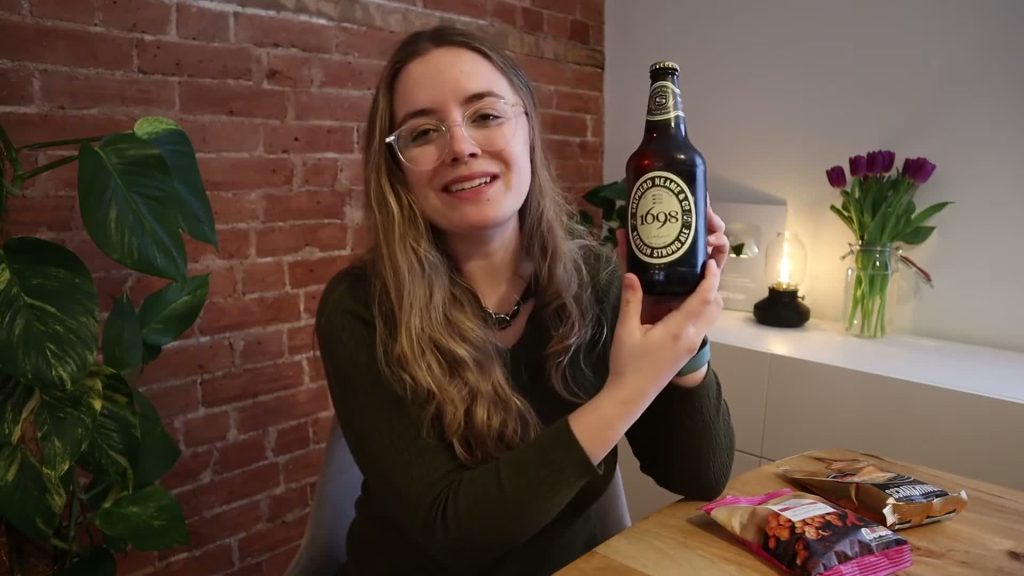
I started with Shepherd Neame’s 1698 Kentish Strong Ale, the lowest-strength drink in my selection at 6.5% on the bottle. I drank it straight from the bottle, fully aware that this would upset some people. More importantly, it was delicious. I hadn’t thought it would be, and suddenly I was both pleased that I’d found something I liked and nervous that I’d want to drink the rest.
The label described a roasted, fruity, hoppy ale with a rich, fruity, warming taste. I couldn’t have supplied a much more sophisticated explanation myself, but I knew I liked it. I gave it four and a half out of five market towns. It wasn’t quite perfect because I was still very new to this, but it was a very good start.
The Brit Hop IPA was a different story. My first reaction was that it was very hoppy, and another taste didn’t persuade me that it was my kind of drink. Going back to the Kentish Strong Ale made the difference obvious: that one was so much nicer to me. I could tell the Brit Hop was a good drink, but I didn’t like its taste. Two out of seven hops, and the imaginary hops had gone a bit mouldy. It did start to grow on me slightly, but I was ready to carry on.
My unprofessional palate had limits
McEwan’s Champion was much more to my taste. I liked it, found it smooth and thought it was delicious, but when I tried to compare it with the first ale, I couldn’t tell a huge difference between them. They were very close to my unprofessional palate. I could appreciate what I was drinking without having a particularly useful explanation of how it differed. Nine out of ten McEwans lining up to cheer for their champion brew.
BrewDog’s Mr. President, described on its label as a Defiant Double IPA, did not have the same effect. After a taste, I needed a snack and a moment to think. I was discovering that I didn’t really like whatever that IPA taste was. I’d disliked the Brit Hop, and I disliked this one too. I couldn’t explain the flavour very eloquently, although “hoppy” was the word I kept reaching for. Again, I could tell it was a good drink while knowing it wasn’t for me. Two out of eight impeachments. Give me the Kentish Strong Ale instead.
At least the snacks were going well. I’d bought Tesco’s sweet chilli crispy coated peanuts and Mr. Porky’s Original Scratchings for the tasting. The peanuts were a lovely surprise, and I kept wanting to eat more of them. The pork scratchings reminded me that I didn’t really like pork scratchings. I was pretty sure I’d tried them years earlier, but there was something about them that still wasn’t doing it for me. Three out of eight pieces of rind.
Chocolate and banana left me confused
The last drink was Vocation’s barrel-aged chocolate and banana imperial stout. Its label said 11.4%, the highest figure in the five I’d brought home, and the first taste hit me like a freight train. The chocolate and banana were incredibly obvious. Sometimes a beer label promises fruit and I can’t taste any, but there was no searching for the flavours in this one. It was strong, smooth and very much chocolate and banana.
I kind of hated it and kind of loved it. It tasted like a dessert drink, which was a weird combination, and I wasn’t sure what to think. My verdict was a very confused five out of seven bananas dipped in alcohol and laced with chocolate. I loved trying something I was so unsure about, but it hadn’t displaced my favourite.
Out of those five drinks, I knew exactly which one I wanted to go back to: Shepherd Neame’s 1698. I love Kent, and I loved that Kentish Strong Ale. It was delicious to me, and I planned to have the rest of it.


No Comments